
The mistake happens the first time you drive home from the trail
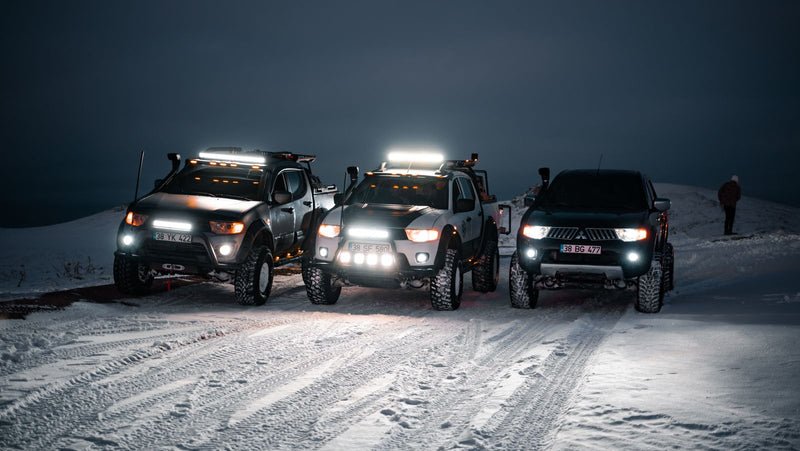
You install a light bar, wire it straight to a toggle switch on the dash, and it works great on the trail. Then you forget to flip it off before you pull back onto pavement, or you never gave it a switch that's easy to reach in the first place, and now you're running a 30-inch bar aimed at windshield height into oncoming traffic on a two-lane road. Nobody gets hurt most of the time. But you can get pulled over, you can get a fix-it ticket or an equipment citation, and in the rare case where that glare contributes to a crash, you've handed a plaintiff's attorney a very easy argument about what you did wrong and why.
This isn't a legal opinion piece, and laws vary enough by state and country that anything more specific than general principles would be wrong somewhere. What follows is what actually gets regulated almost everywhere in some form, what tends to trip people up, and how to wire and mount your lighting so "off on the road" is a real switch position and not something you have to remember.
Three things get regulated, not one
People tend to think of this as one question — "is my light legal" — when it's really three separate ones, and a light can pass one and fail another.
Color
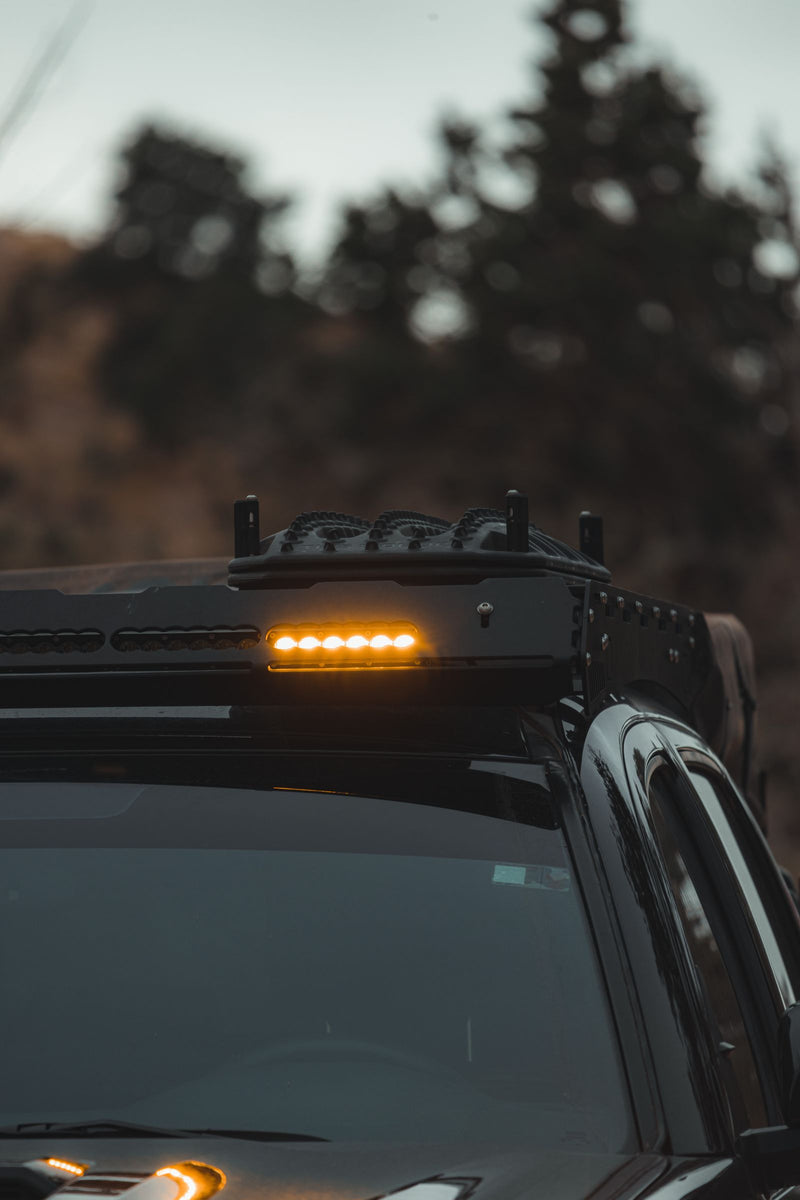
Forward-facing white light is the closest thing to a universal default for auxiliary driving and work lights, because it doesn't get confused with turn signals, hazards, or emergency equipment. Amber shows up a lot on ditch lights and some auxiliary setups because it reads as "not a headlight" to oncoming drivers while still being broadly accepted. Red and blue on the front or sides of a personal vehicle are the ones to leave alone entirely — those colors are reserved for emergency and utility vehicles almost everywhere, and running them is one of the fastest ways to get a piece of equipment confiscated rather than just cited. Rock lights and underglow in RGB colors occupy a genuine gray area: they're sold as accessories and plenty of people run them, but a light visible from the front or rear while the vehicle is moving on a public road is a different question than the same light used as static camp or show lighting. If you're picking colors for anything that will ever be on while you're driving on pavement, white or amber is the safer default, and you check your own state's equipment code before you buy anything unusual.
Mounting and aim
A light bar mounted on the roof or above the grille sits higher than a headlight, which means its beam pattern crosses into oncoming eye level at a different distance than a headlight does, even when the light itself is "street legal" on paper. This is a real problem independent of the legal question — it's also just inconsiderate to the next driver. Aim matters as much as mounting height: a flood or combo beam aimed level or slightly up throws stray light into mirrors and windshields far past where it's doing you any good, while the same light aimed to hit the ground 50 to 75 feet out is both more useful off-road and less obnoxious on it. Some states also regulate whether high-mounted auxiliary lights need to be covered when driven on a public road, separate from whether they're wired to be off. A physical cover is worth having even where it isn't required, because it's a second layer of protection against the switch getting bumped or forgotten.
Being off on the road
This is the one that matters most and the one people treat most casually. The near-universal baseline is that auxiliary, off-road-only lighting has to be inoperable while driving on a public road — not "usually off," not "off unless I forget." That distinction is exactly why the switch and the wiring behind it deserve as much attention as the light itself.
Wiring it so "off" is a real switch position
The reliability problem with most light bar installs isn't the light, it's the switch. If your auxiliary lighting is wired into a circuit that's live whenever the ignition is on — sharing a fused feed with your gauges or your dash lighting, say — then "off" depends entirely on you remembering to flip a separate toggle every single time, and eventually you won't. The fix isn't complicated, it's just a wiring decision made once at install time: run auxiliary lights through their own dedicated relay and switch, on their own circuit, physically separate from anything that's normally on with the ignition. The full relay, fuse, and switch-panel wiring process — wire gauge, where to ground, how to fuse it properly — is covered in our guide to wiring auxiliary lights, and it's worth doing right the first time rather than retrofitting a safer setup after the fact.
A few habits make the switch itself harder to get wrong:
- Put it somewhere you'll notice, not somewhere convenient to hide. A switch tucked under the dash out of your sightline gets forgotten. One in a labeled panel at eye level gets checked.
- Label it. A blank rocker switch identical to four others invites someone else driving your truck — or you, three months from now — to flip the wrong one without thinking.
- Consider a physical interlock for anything genuinely bright. Some builds wire a 50-inch bar so it can only come on with the parking brake engaged or the transfer case in low range, which makes "forgot to turn it off" structurally difficult rather than just unlikely. That's more wiring complexity than most people need, but it's worth knowing the option exists for a light that could actually blind someone.
- Don't wire anything auxiliary into your hazards, high beams, or DRL circuit. It's tempting because the wiring is already there and already switched, but it means your auxiliary lights come on every time that circuit does, on the road, with no way to separate the two.
Headlights are a different compliance question entirely
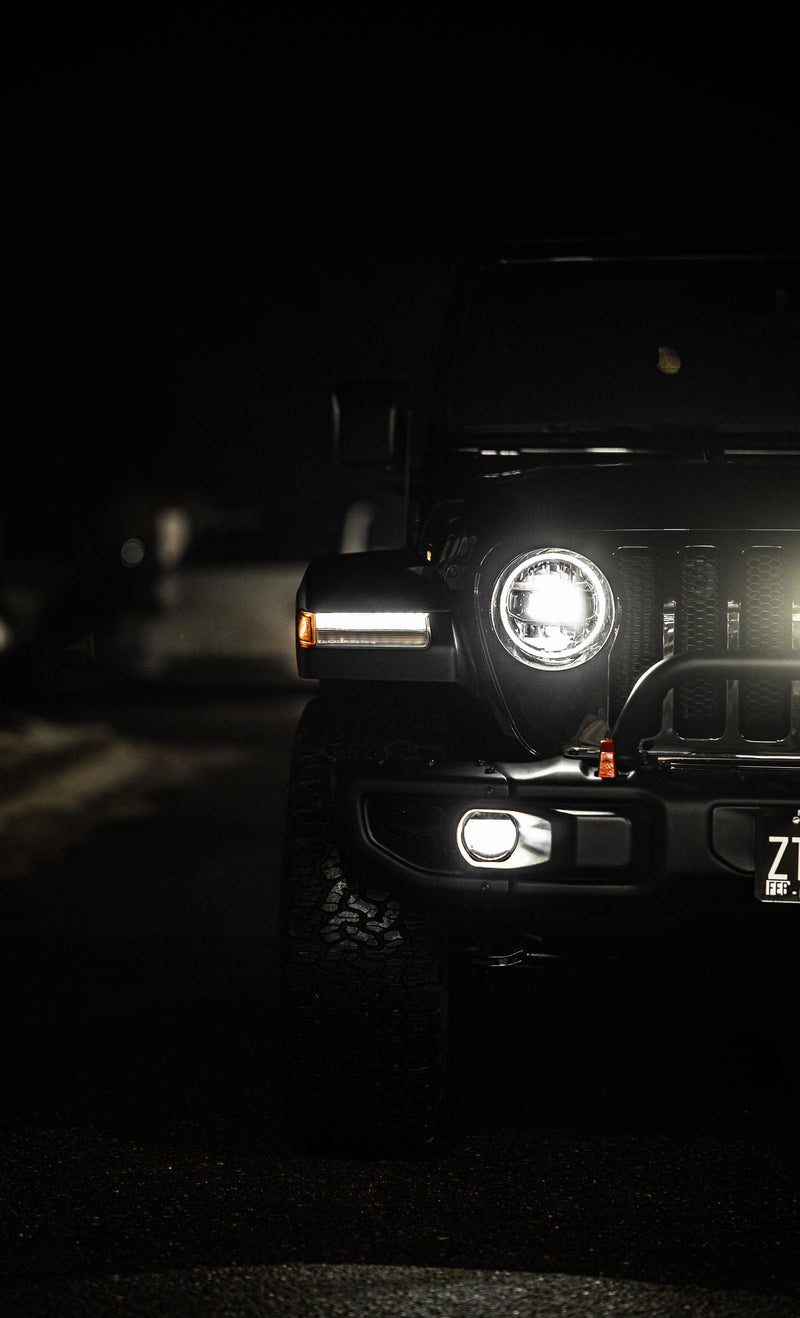
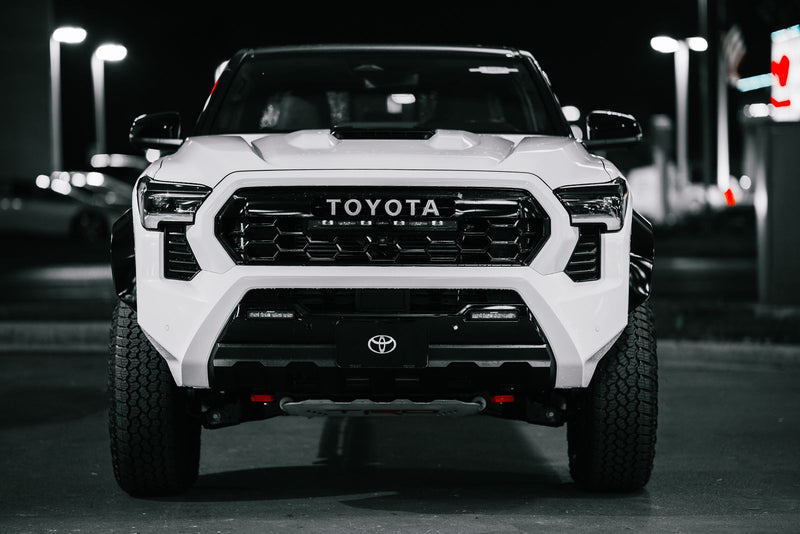
Everything above is about auxiliary, off-road-only lighting. Your actual headlights live under a different set of rules, because they're not optional equipment you can simply switch off — they have to meet a beam pattern and cutoff standard so oncoming drivers aren't blinded on every drive, not just the ones after a trail run. Swapping bulbs or housings changes that photometric pattern, sometimes for the better and sometimes into something that scatters light everywhere and fails inspection even though it's technically brighter. We cover that distinction, and how to shop for a housing rather than just a brighter bulb, in headlight upgrades: why the housing matters more than the bulb. The short version: auxiliary lighting is about having a switch and using it responsibly, headlights are about the hardware itself meeting a beam standard whether you touch a switch or not, and conflating the two is how people end up passing one check and failing the other.
Rock lights, ditch lights, and the "it's basically always on" category
Rock lights and ditch lights sit in an awkward middle ground, because a lot of people leave them on for general visibility around camp, while loading gear, or just because they look good, which makes "off on the road" a habit you have to build rather than a single wiring fix. A few practical notes:
- White or amber rock lights read as work lighting. Colored RGB rock lights read as show lighting, and show lighting visible from outside the vehicle while it's moving on a public road is exactly the gray area worth avoiding until you've checked your local rules.
- Ditch lights mounted at the A-pillar are genuinely useful for both trail visibility and backing down a driveway, and they're one of the easier lights to justify running more often — but they still belong on the same dedicated, clearly-off circuit as everything else, not wired hot.
- Strobing, flashing, or pulsing modes on any light — a feature a lot of rock light and underglow kits include for show use — are one of the more consistently restricted behaviors, because flashing lights are visually associated with emergency and hazard equipment. If a kit has a strobe mode, treat it as a parked, off-road, or show-only feature and nothing else.
A checklist for the drive from trail to street
- Confirm the color of anything forward- or side-facing is white or amber, and that nothing red or blue is visible from outside the vehicle.
- Confirm every auxiliary light is on its own switch, separate from any circuit that's live with the ignition.
- Physically flip that switch off, or close the cover, before you're back on pavement — don't trust memory alone for a light bright enough to blind someone.
- Check aim on anything roof- or grille-mounted; if it's hitting your own windshield reflection or a garage door at eye level, it's hitting oncoming drivers the same way.
- Know your own state's equipment code before you buy anything unusual in color or mounting position — it's a five-minute search and it's the only source that's actually current for where you live.
The mistakes that keep showing up
- Wiring auxiliary lights into an always-hot or DRL circuit because the wiring's already there, which removes your ability to separate trail use from street use entirely.
- Buying colored lenses or RGB kits without checking local rules first, then finding out the hard way that the color, not the brightness, was the actual problem.
- Leaving a light bar uncovered and aimed level instead of angled down, so even a properly-switched-off habit doesn't matter on the rare night you forget.
- Assuming "everyone around here runs it, so it must be fine" — common practice in a given area isn't the same as what's actually written in the equipment code, and enforcement is inconsistent until the one time it isn't.
- Treating the headlight housing and the auxiliary lighting as the same compliance problem, when they're regulated on completely different terms.
Related reading
- Wiring Auxiliary Lights: Relays, Fuses, and Switches — the dedicated-circuit wiring this article assumes you'll set up.
- Headlight Upgrades: Why the Housing Matters More Than the Bulb — the separate compliance question for your actual headlights.
- Top 5 Offroad Light Bars and Pods, Picked by Use Case — once the legal side is sorted, which type of light fits how you actually drive.
None of this is complicated once the wiring is done right: pick white or amber for anything that might be on near traffic, put every auxiliary light on its own clearly labeled switch, aim it down instead of level, and make checking your local equipment code part of the buying decision instead of an afterthought. Browse off-road LED lighting and vehicle lights to put together a setup that works as hard on the trail as it does staying out of your way on the drive home.
Keep reading: more Lighting guides
If this guide helped, these related Offroad.net articles go deeper on the same topic:
- Water in Your Axles: The Fluid Service Everyone Skips After a Wet Run — Milky gear oil means water got into your axle, and the clock started the moment it happened.
- Wheel Bearings: How to Catch One Going Bad Before It Strands You — A growling wheel bearing gets blamed on tires more often than anything else on a trail rig — here is how to identif
- Mud, Salt, and Rust: How to Wash an Offroad Rig So It Lasts — Mud and road salt rust a trail rig from the places you never see; here is how to wash, dry, and protect the undersi
- Top 5 Offroad Light Bars and Pods, Picked by Use Case — Five kinds of offroad light bars and pods, matched to how you actually drive, with the tradeoff each one comes with
- Keeping Dust Out of Your Cab: Where It Gets In and What Actually Fixes It — Fine dust follows the rear wake and the gaps you never look at, so start at the back of the cab and work forward.
Browse everything in our Lighting section for more.