
A Colorado that drove fine the day the lift went in and now needs a hand on the wheel every second on the interstate is one of the most common complaints we hear from midsize truck owners. Usually nothing is broken. The direct answer: yes, every Chevy Colorado needs a full four-wheel alignment after a lift or leveling kit, done after the new suspension settles. The front sets caster, camber and toe, but the leaf-sprung rear axle sets the thrust line the truck steers around, and on a lifted Colorado the front adjustment range runs out sooner than most people expect.
Below: what a lift changes at each end, how to read the symptoms, when upper control arms become part of the job, the electronics step people forget, and what to ask the shop for.

What a lift does to a Colorado's geometry
The Colorado is a body-on-frame midsize pickup with two very different suspensions. Up front is an independent setup with upper and lower control arms and a coil spring around a shock at each corner. Out back is a solid axle on leaf springs. Each end reacts to a lift in its own way.
Front: independent control arms
A spacer, leveling kit or taller strut assembly raises the front by letting the suspension sit lower in its travel. The control arms now angle further downhill from the frame, and three things move together:
- Camber shifts, because the upper and lower arms are different lengths and swing through different arcs.
- Caster drops, which takes away some of the self-centering you feel at highway speed.
- Toe changes, because the tie rods sit at a steeper angle, and toe changes more as the suspension cycles over bumps.
On most Colorado generations the alignment tech corrects camber and caster with cam bolts at the lower control arm mounts and sets toe at the tie rods. The cams only have so much range. On a lifted front end a lot of that range gets spent bringing camber back, which leaves little for caster. Check your own truck's adjustment points before assuming anything, because layouts differ between generations and trims.
Rear: solid axle on leaf springs
The rear axle has no camber or caster adjustment in normal use, and unlike a coil-sprung rear there is no lateral rod pulling it sideways when you lift. What changes is whether the axle stays square to the frame. Each spring is clamped to the axle with U-bolts, and a center pin in the spring pack locates the axle front to back. Add-a-leafs, new spring packs and especially lift blocks all mean unclamping the axle and clamping it back, and if one side seats a little forward of the other, the axle sits skewed. That skew is your thrust angle.
If you are still choosing the lift itself, the Chevy Colorado lift kit guide compares leveling kits, strut lifts and rear leaf options. The general version of this topic for any truck is in alignment after a lift.

Symptoms and what usually causes them
Plenty of post-lift complaints are not alignment. These are the ones that genuinely point at geometry on a Colorado:
- Wander on the highway. The truck needs constant small corrections and does not settle back to center after a lane change. Low front caster is the usual cause, often made worse by a nose-down stance.
- Steering wheel crooked while the truck drives straight. Either toe was set before the lift settled, or the shop set the front to a crooked rear thrust line and the wheel ended up off-center to compensate.
- A steady pull to one side. Usually a side-to-side difference in caster or camber. If swapping the front tires side to side moves the pull, it is a tire, not the alignment.
- Edge wear on the front tires. One worn shoulder points at camber; feathered tread that feels sharp one way and smooth the other points at toe.
- The truck crabs slightly down the road. The rear tires do not follow the fronts exactly. That is a rear axle that is not square to the frame.
- Traction or stability warning lights after an alignment. Often a steering angle sensor that was not reset with the wheel centered. More on that below.
Usually not alignment: a shake at one speed (wheel balance, or driveline vibration after a lift) and clunks or pops over bumps (suspension noises after a lift).
Let the lift settle, then align
New springs and struts settle. Ride height drops a little over the first few hundred miles as coils seat, leaf packs take a set and bushings relax. Align on install day and the settings drift as the truck comes down.
The sequence most shops recommend:
- Get a rough alignment right after the install so the truck is safe to drive home.
- Drive normally for a few hundred miles, including some rough roads.
- Retorque the rear U-bolts and front strut hardware to spec, since both can loosen slightly as new parts seat.
- Measure ride height at all four corners and confirm it has stopped changing.
- Get the full alignment, with printouts from before and after the adjustment.
Rake, bed loads and the leveling kit trap
Watch the stance as well. A Colorado leaves the factory with the rear higher than the front so it levels out with weight in the bed. Level only the front, then load the bed, and the truck sits nose-high; lift the rear with blocks and drive empty, and it can sit nose-down. Either tilt adds or subtracts front caster before the shop touches a cam. If you usually carry a rack, camping gear or a heavy toolbox, align with that load in the truck. The leaf springs vs. blocks guide explains how each rear lift method behaves under load.

Squaring the rear axle
Because the rear axle sets the thrust line, a Colorado aligned with a skewed axle is aligned to the wrong target. You can check it at home. Park on level ground with the wheels straight. Measure from the center of the front hub to the center of the rear hub on each side. The two numbers should match closely. A clear difference means one side of the axle sits forward of the other.
Common causes after a lift: a center pin that was not seated when the U-bolts were tightened, tapered blocks installed backward or mismatched side to side, U-bolts that loosened and let the axle walk, or a hanger bent on the trail.
The fix is mechanical, not an alignment setting: loosen the U-bolts, square the axle, seat the pins, and torque everything back to spec. If tall blocks keep letting the axle move, replacement springs from leaf springs are the more stable long-term answer.
When the front cams run out: upper control arms
With a modest leveling kit, a good tech can usually land camber, caster and toe inside the factory range. As front lift goes up, that gets harder. The cams run out of travel and the tech has to trade caster for camber. On larger front lifts the factory upper ball joint also works near the edge of its angle, which can bind at full droop and wears the joint faster.
Aftermarket upper control arms fix both problems. They relocate the upper ball joint, usually rearward to add caster and sometimes outward to help camber, and most use a high-angle ball joint or a uniball that tolerates the steeper angle. With the geometry corrected at the top, the lower cams go back near the middle of their range and the tech has adjustment left to do the job properly.

Signs you need upper arms rather than another alignment attempt:
- The printout shows the cams at or near full adjustment on one or both sides.
- Caster sits at the bottom of spec, or below it, and the truck still wanders.
- The upper arm or ball joint boot touches the spring or strut at full droop.
The deeper explanation of arm geometry, uniballs and fitment is in when a lift needs upper control arms. If you are shopping, start with control arms, and look at suspension components for the supporting hardware.
ZR2 and Trail Boss trucks
A ZR2 has a wider stance and its own suspension tuning, and a Trail Boss already sits higher than a base truck. Lifting either one leaves less extra height before the arms and CV axles run out of angle, so the alignment window tightens faster. Tell the shop your exact trim and buy parts listed for it. The Chevy Colorado shocks guide covers dampers for the new height.
The step people forget: the steering angle sensor
Modern Colorados use electric power steering and stability control that rely on a steering angle sensor knowing where center is. Adjusting toe can shift the wheel's straight-ahead position slightly, and if the sensor is not recalibrated the truck may show a traction or stability light or the steering assist may feel like it nudges to one side. A proper alignment on a late-model truck ends with the sensor reset using a scan tool, with the wheel locked straight. Ask whether the shop does that before you hand over the keys.
What to ask the alignment shop for
A lifted Colorado is not a hard alignment, but it is easy to do a lazy one. Ask for:
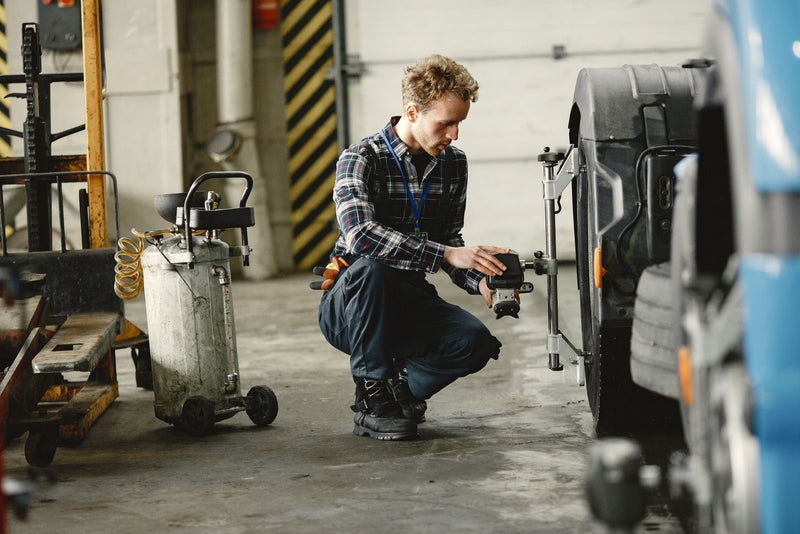
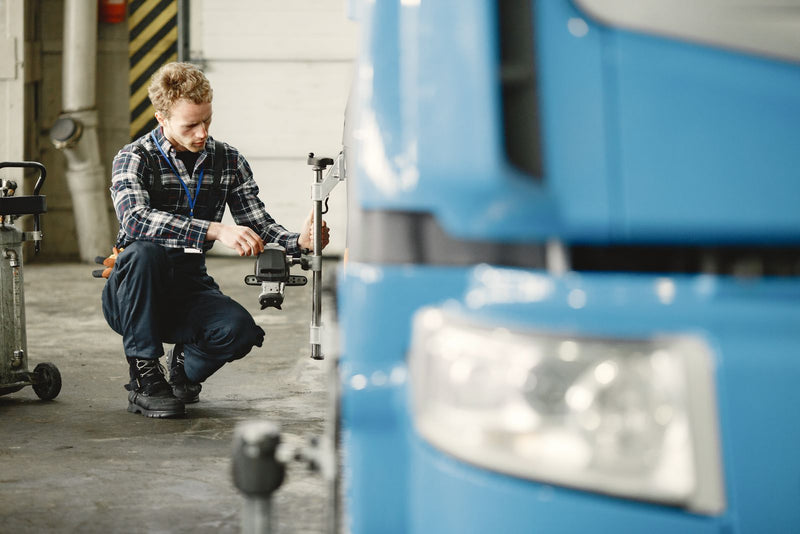
- Before and after printouts showing all four wheels, including thrust angle, not just a green summary sheet.
- Thrust angle checked first. If it is off, have the rear axle squared before the front is set. Aligning the front to a bad thrust line is how you end up with a crooked steering wheel.
- Caster toward the high end of the range, as long as both sides stay close to each other. More caster improves straight-line stability on a lifted truck.
- Toe set with the steering wheel locked straight, the steering angle sensor reset, and a test drive to confirm.
If the shop says the truck cannot be brought into spec, ask which angle is out and by how much. That number points to upper arms, a rear axle that needs squaring, or a bent part.
Bigger tires and a quick at-home check
Larger tires and lower-offset wheels do not change the alignment settings by themselves, but they make a bad alignment louder. Get the alignment after the final wheel and tire combination is on the truck, and rotate on a regular schedule. The Chevy Colorado tire size guide covers what fits at each lift height, and all wheels and tires has the options.

Between alignments, once a month or after a hard trail day:
- Run your palm across the front tread in both directions. Feathered edges mean toe has moved.
- Recheck the hub-to-hub measurement on both sides. If it changed, the axle has shifted on the springs.
- Check tie rod ends, ball joint boots and U-bolts for torn rubber, play or looseness. The post-trail inspection checklist covers the rest.
Frequently asked questions
Do I need an alignment after leveling my Colorado?
Yes. Even a small front spacer changes camber and toe, and toe in particular wears tires quickly. Give the truck a few hundred miles to settle, then get a full four-wheel alignment with before and after printouts.
Why does my lifted Colorado wander on the highway?
The most common cause is low front caster after the lift, often because the cams were used up correcting camber. A nose-down stance makes it worse. Check tire pressure and tie rod ends first, then look at upper control arms that add caster.
Why is my steering wheel crooked after a lift and alignment?
Usually toe was set before the suspension settled, or the front was aligned to a skewed rear axle. Have the shop check thrust angle, square the rear if needed, reset toe with the wheel locked straight, and recalibrate the steering angle sensor.
Get it tracking straight
Let the lift settle, square the rear axle, align with printouts in hand, and do not accept a wandering Colorado as the price of height. Browse control arms and lift kits for the parts, or all suspension if you are planning the whole setup at once.
Related reading
- Alignment After a Lift: Caster, Camber, and Toe — the general version for any truck.
- Chevy Colorado Lift Kit Guide — choosing the lift before you align it.
- Chevy Colorado Shocks — matching shocks to the new ride height.
- Toyota Tacoma Alignment After a Lift — the same front end story on the Colorado's closest rival.
Keep reading: more Suspension guides
If this guide helped, these related Offroad.net articles go deeper on the same topic:
- Chevy Colorado Lift Kit Guide: Leveling, Strut Lifts, and Rear Leaf Options — How to choose between a leveling kit, a strut lift, and a full kit on a Chevy Colorado, and what the leaf-sprung re
- Chevy Colorado Shocks: How to Pick the Right Ones for Your Lift and Trails — How to size and choose Chevy Colorado shocks by lift height, tire and bumper weight, and how hard you drive.
- Toyota Tacoma Alignment After a Lift: Why It Wanders and How to Fix It — Why a lifted Toyota Tacoma wanders, pulls or wears tires after a lift, when the factory alignment cams run out, and
- Ford Bronco Alignment After a Lift: Why It Wanders and How to Fix It — Why a lifted Ford Bronco wanders, pulls or sits with a crooked steering wheel, and how caster, upper control arms a
- Toyota 4Runner Alignment After a Lift: Why It Wanders and How to Fix It — Why a lifted Toyota 4Runner wanders, pulls or sits with a crooked steering wheel, and how caster, upper control arm
Browse everything in our Suspension section for more.