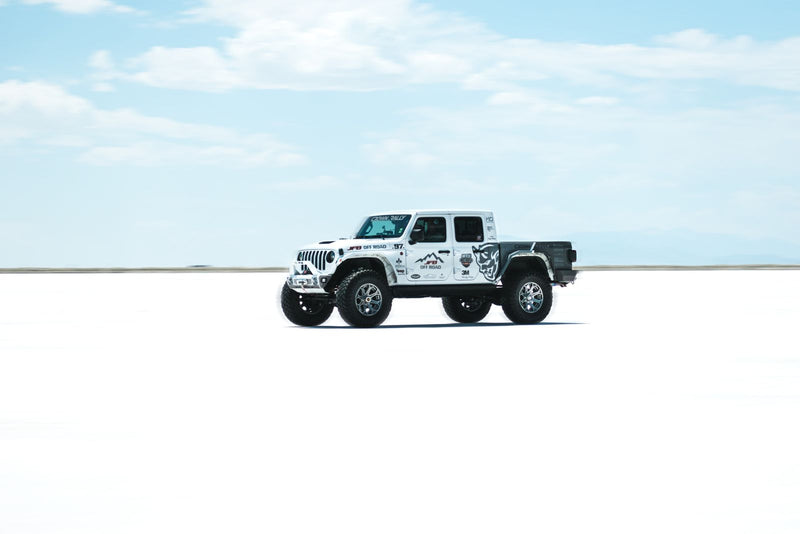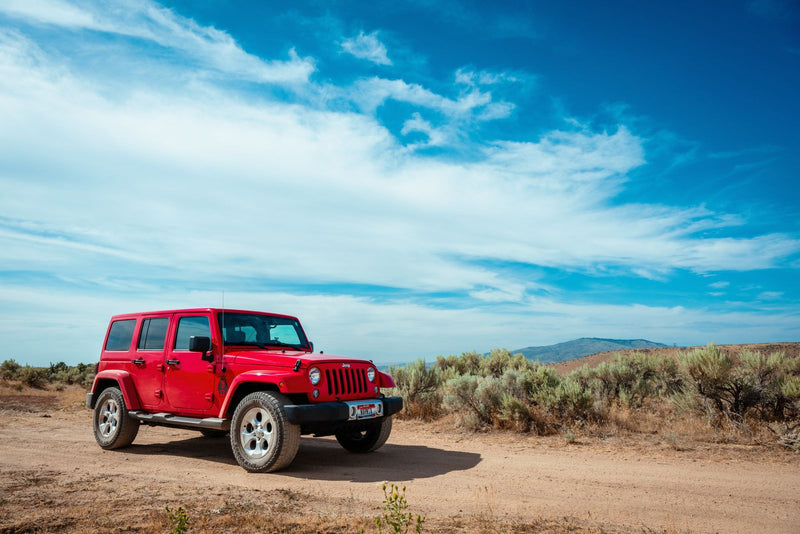

The most common Wrangler tire mistake is assuming every JL fits the same rubber. A Sport, a Sahara, and a Rubicon leave the factory on different tires, with different fender clearance and different gears, so the same 35 inch tire is a bolt-on for one and a rubbing headache for another. So what size tires fit a Jeep Wrangler JL? A stock Sport or Sahara fits a 33 inch tire with no lift, a stock Rubicon already wears 33s and can carry 35s on the street but needs help before real flex, a 2 to 2.5 inch lift makes 35s the sweet spot for every trim, and 37s ask for a taller lift, new gears, and a stronger spare carrier. The details below show where each step stops being simple.

What a Wrangler JL wears from the factory
Factory JL tire sizes split by trim more than by year, and the gap between the smallest and largest is bigger than most owners expect. The door jamb placard is still the only reliable source for your exact Jeep, but this is the pattern for the 2018 and newer JL:
| Trim | Factory tire | Actual diameter |
|---|---|---|
| Sport and Sport S | 245/75R17 | About 31.5 inches |
| Sahara | 255/70R18 | About 32.1 inches |
| Willys, 2018 to 2023 | LT255/75R17 | About 32 inches |
| Willys, 2024 and newer | LT285/70R17 | About 32.7 inches |
| Rubicon | LT285/70R17 | About 32.7 inches |
| Xtreme 35 package, Rubicon 392 | LT315/70R17 | About 34.4 inches |
Two things in that table matter more than the rest. The Rubicon pairs its 33s with high-clearance fender flares and a suspension that sits roughly an inch taller than a Sport or Sahara, which is why its fitment numbers are always better. And the Xtreme 35 package is Jeep proving the rule itself: from the factory, 35s come bundled with a 1.5 inch lift, 4.56 gears, and a reinforced swing gate to carry the spare. If you need a refresher on what the numbers mean, our guide to reading a tire sidewall covers size codes, load range, and ply ratings.
Stock height: how big can you go without a lift?
On a stock Sport, Sport S, Sahara, or early Willys, the safe ceiling is the 33 inch class: a 285/70R17 at about 32.7 inches, or a 275/70R18 on a Sahara at about 33.2 inches. That step adds a little ground clearance, stays inside the fenders at full lock, and keeps the speedometer error small enough to ignore. No trimming, no drama.
The Rubicon is the exception everyone asks about. Its factory 33s leave room for a 35 (a 315/70R17) to bolt on and drive fine on pavement, and plenty of owners do exactly that. The catch shows up off-road: at full flex, especially disconnected, that 35 contacts the inner fender liners. Jeep's own answer is the 1.5 inch lift in the Xtreme 35 package. Treat a stock Rubicon on 35s as a street setup until you add bump stop or a small lift for trail use.
A 2 to 2.5 inch lift: the 35 inch sweet spot
For every other trim, 35s want a 2 to 2.5 inch lift. With that height, a 315/70R17 or a 35x12.50R17 clears the fenders cleanly on a Sport or Sahara, and a Rubicon gains the flex room its stock suspension was missing. This is the most common Wrangler build on the road for a reason: real trail clearance, still civilized on the highway, and no cutting.
Wheel choice decides whether it rubs. A 12.50 inch wide tire on the factory wheels, which carry roughly 6 inches of backspacing, can kiss the sway bar and control arms at full steering lock. Wheels with about 4.5 inches of backspacing are the common fix and push the tire out just enough. Whether that lift should be spacers or a full spring setup is its own decision, and our breakdown of coilovers vs. spacer lifts walks through what each dollar actually buys.

37 inch tires: what else has to change
Thirty-sevens are a package, not a tire swap. Plan on a 3.5 inch lift with proper bump stop extensions so the tire stops before the fender does, and expect minor inner fender trimming on Sport and Sahara trims at full lock. The steering, ball joints, and wheel bearings all work harder under a tire this heavy, and the factory spare carrier is out of its depth, which the next two sections cover. Owners who skip the supporting work usually end up doing it later, one worn part at a time.

Gearing: what 35s and 37s do to your ratios
Taller tires are taller gearing. Most Sport and Sahara JLs run 3.45 axle gears, and a 35 makes that feel like less, with lazier acceleration and an automatic that hunts on hills. The Rubicon's 4.10 gears tolerate 35s well enough that many owners never regear. Step a non-Rubicon to 35s and 4.56 is the common regear target; it restores the shift points and highway manners the bigger tire took away. At 37 inches, regearing stops being optional for any trim: 4.88 or 5.13 gears are the usual call, and Jeep itself ships 4.56s with its factory 35 package, which tells you where the factory thinks the line is. Our guide to regearing after bigger tires explains how to match a ratio to a tire size. Either way, budget for a speedometer recalibration: a Jeep calibrated for 32s reads roughly 8 to 10 percent low on 35s.
Do not forget the spare
A Wrangler carries its spare on the tailgate, and the factory mount was sized for factory tires. A matching 33 inch spare rides on the stock carrier without complaint. A 35 inch spare is where reinforcement starts: Jeep bundles a swing gate reinforcement with its own 35 inch package, and hinge reinforcement kits exist for exactly this reason, because an unreinforced tailgate under a heavy 35 will eventually sag and stop latching cleanly. A 37 inch spare belongs on a heavy-duty hinged carrier or a bumper-mounted carrier that rests the weight on the frame. Whatever size you choose, match the spare to the other four. A smaller spare on a driven axle is a limp-home compromise, not a trail plan.
Where a Wrangler usually rubs, and what fixes it
JL rubbing shows up in predictable places. First, the inner fender liners at full flex, which is the stock Rubicon on 35s problem, fixed with bump stop extensions or a small lift. Second, the sway bar and lower control arms at full steering lock, almost always a wide tire on stock wheels, fixed with lower-backspacing wheels. Third, the pinch seam area at full lock on tighter setups, which is a trim item, not a lift item. Work through our clearance walkthrough on how big of a tire will actually fit before you buy, and you will know which of the three you are solving for.
Still driving a JK? How the numbers change
The 2007 to 2018 JK runs smaller from the factory: 225/75R16, 255/75R17, or 255/70R18 depending on trim, all around 29 to 32 inches, with the JK Rubicon on the 255/75R17. The JK's wheel wells are tighter than the JL's and its stock wheels carry about 6.25 inches of backspacing, so the stock-height ceiling is a narrow 33, roughly a 33x10.50, and even that can contact the fenders off-road with the sway bar disconnected. Wide 33s rub suspension parts at full lock without spacers or different wheels, and JK 35s want a 2.5 inch lift, with flat fenders buying real clearance. If a JL number in this guide looks generous compared to your JK experience, that is the generational difference, not a typo.
Common mistakes
- Copying Rubicon fitment onto a Sport. The Rubicon's flares, ride height, and 4.10 gears are doing quiet work in every "35s fit stock" claim.
- Buying four tires. The spare has to match, and at 35 inches and up the carrier becomes part of the purchase.
- Skipping the recalibration. Your speedometer, odometer, and shift points are all wrong until the Jeep knows its new tire size.
- Judging fit in the driveway. A tire that clears parked can still eat a fender liner at full flex. Check at lock and under compression.
A simple checklist before you buy
- Read the door placard and note your factory size and diameter.
- Decide the job: daily driver, weekend trails, or dedicated crawler. That picks 33, 35, or 37.
- Match the lift to the tire: none for 33s, 2 to 2.5 inches for 35s, 3.5 inches for 37s.
- Check wheel backspacing if you are going 12.50 wide on stock wheels.
- Price the whole package: fifth tire, carrier reinforcement at 35, gears at 37, recalibration at any size.
Frequently asked questions
What is the biggest tire I can fit on a stock Jeep Wrangler JL?
A 33 inch class tire, such as a 285/70R17, on Sport, Sahara, and Willys trims. A stock Rubicon can carry a 35 on the street, but it will rub the inner fenders at full flex off-road without bump stop or a small lift.
What lift do I need for 35 inch tires on a JL?
A 2 to 2.5 inch lift is the proven setup for Sport and Sahara trims. Rubicons need less for clearance but benefit from about 1.5 to 2 inches for trail flex, which is the route Jeep took with its factory 35 package.
Do I need to regear for 35s?
On a Rubicon with 4.10 gears, many owners do not. On a Sport or Sahara with 3.45 gears, 4.56 gears are the common fix. For 37s, plan on 4.88 or 5.13 gears regardless of trim.
Will a 35 inch spare fit the stock tailgate carrier?
It bolts on, but the unreinforced tailgate was not built for the weight. Add hinge or swing gate reinforcement for a 35, and move to a heavy-duty or bumper-mounted carrier for a 37.
Ready to size up your Wrangler?
Start from your placard, pick the tire that matches how you actually wheel, and buy the supporting parts in the same order the factory does: clearance first, then gearing, then the carrier. A Wrangler sized honestly will out-drive a bigger build that skipped the basics.
Keep reading: more Wheels & Tires guides
If this guide helped, these related Offroad.net articles go deeper on the same topic:
- Ford Bronco Tire Size Guide: What Fits Stock, Leveled, and Lifted — the Wrangler's closest rival, sized the same way, trim by trim.
- Toyota Tacoma Tire Size Guide: What Fits Stock, Leveled, and Lifted — what fits a Tacoma at stock height, with a leveling kit, and with a real lift.
- Toyota 4Runner Tire Size Guide: What Fits Stock, Leveled, and Lifted — the same stock, leveled, and lifted walkthrough for the 4Runner.
- Chevy Colorado Tire Size Guide: What Fits Stock, Leveled, and Lifted — Colorado fitment by height, with the wheel and rubbing details that decide it.
- Death Wobble: What Actually Causes It and How to Fix It — bigger, heavier tires punish worn steering parts, and this is how it shows up.
Browse everything in our Wheels & Tires section for more.